
24/7 Emergency Care ✦ Advanced ICU & NICU ✦ Expert Doctors ✦ Critical Care Services ✦ Modern Diagnostics ✦ Ambulance Support ✦ 24/7 Emergency Care ✦ Advanced ICU & NICU ✦ Expert Doctors ✦ Critical Care Services ✦ Modern Diagnostics ✦ Ambulance Support ✦
Audiometry & Hearing Care — Sunray Hospitals
Audiology & Hearing Care

Hear Every Moment
With Clarity

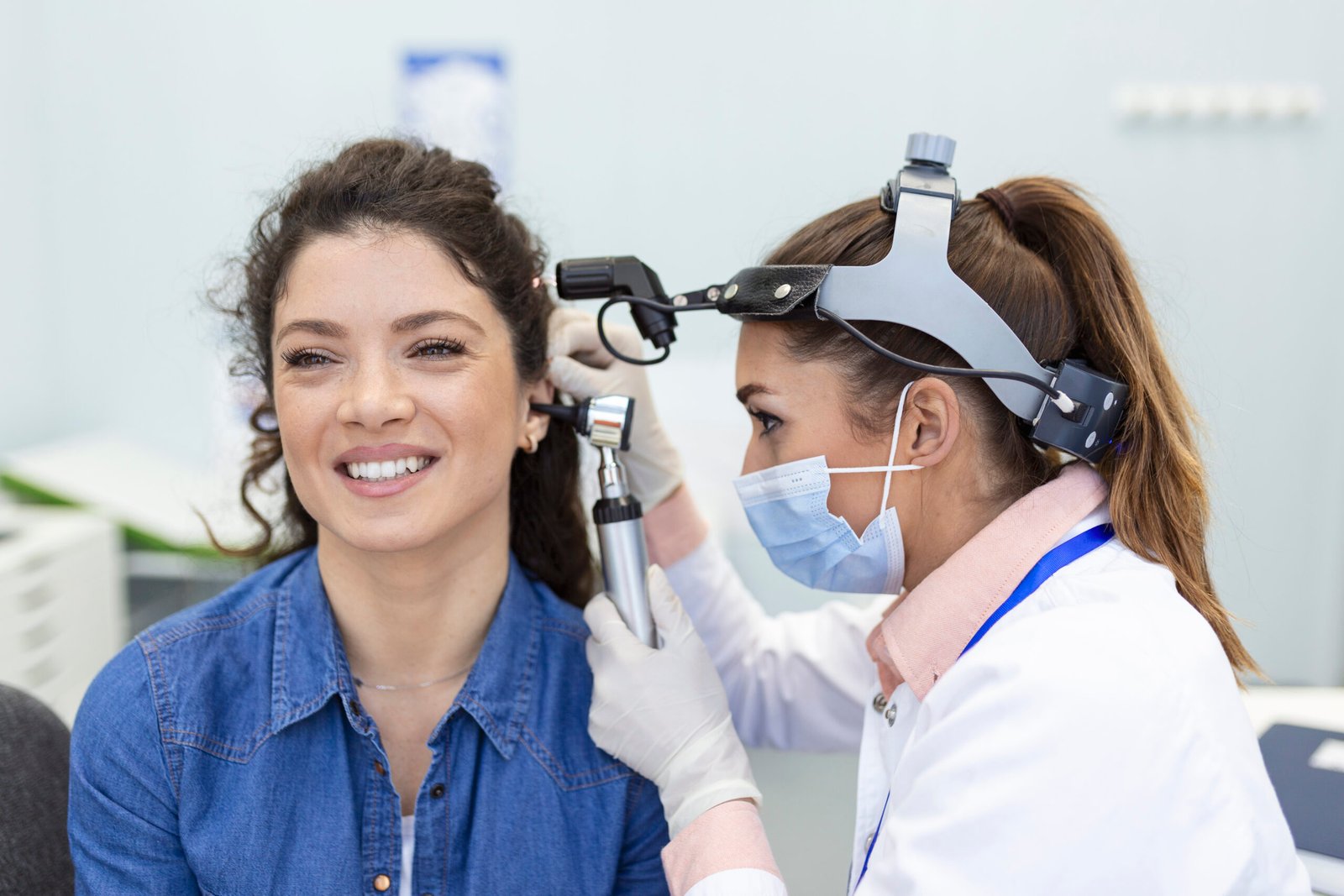
Our Audiology department offers comprehensive hearing assessments, diagnostic tests, and rehabilitation programmes for patients of all ages — from newborn hearing screening to adult tinnitus management.
10+ Hearing Tests
3000+ Patients / Year
All Ages Newborn to Senior
60min Full Evaluation
NABH Certified Unit
Sunray Hospital Audiometry and Hearing Care
98% Test Accuracy
Rate

Precision Hearing Diagnostics
Under One Roof

Sunray Hospital's Audiology and Audiometry unit is a fully soundproofed, acoustically treated facility offering the complete spectrum of hearing health services. Our department is led by qualified audiologists and ENT specialists who work together to diagnose, treat, and rehabilitate hearing and balance disorders across all age groups.

From newborn hearing screening using OAE testing to adult audiograms, tympanometry, ABR, and hearing aid fitting — every service is delivered in calibrated, ISO-compliant soundproof booths using equipment that meets international audiometric standards.

Reading an Audiogram

An audiogram plots your hearing threshold in decibels (dB HL) across frequencies from 250 Hz to 8000 Hz. Our audiologist explains every data point in plain language after your test.

Right ear (○)
Left ear (×)
Normal threshold
Normal (0–25 dB) Mild (26–40 dB) Moderate (41–55 dB) Mod-Severe (56–70 dB) Severe (71–90 dB) Profound (91+ dB) 250 500 1k 2k 3k 4k 8k Frequency (Hz) -10 0 20 40 60 80 100 Hearing Level (dB HL)

Diagnostic Tools That
Miss Nothing

Our audiology suite houses calibrated, internationally certified equipment covering the entire diagnostic pathway — from basic pure-tone audiometry to advanced electrophysiological testing.

Clinical Audiometer — Pure Tone Audiometry
Interacoustics AC40 two-channel audiometer with air and bone conduction testing across 125 Hz–8000 Hz, meeting ISO 8253-1 standards for diagnostic accuracy.
Pure Tone Testing
BERA / ABR — Brainstem Evoked Response
Biologic Navigator Pro ABR system for objective electrophysiological hearing assessment — essential for newborns, infants, uncooperative patients, and retrocochlear pathology screening.
Electrophysiology
OAE — Otoacoustic Emissions Testing
Transient TEOAE and DPOAE testing for neonatal hearing screening, cochlear function evaluation, and noise-induced hearing loss monitoring — results in under 2 minutes.
Newborn Screening
Tympanometry & Impedance Audiometry
Interacoustics AT235 for middle ear pressure measurement, eardrum mobility, Eustachian tube function, and stapedius reflex testing — critical for glue ear and ossicular chain diagnosis.
Middle Ear Function
Speech Audiometry & Word Recognition
Speech Reception Threshold (SRT) and Word Recognition Score (WRS) testing to assess functional hearing ability in noise — essential for hearing aid candidacy and cochlear implant evaluation.
Speech Testing
Hearing Aid Trial & Digital Fitting
REM (Real Ear Measurement) fitting using Verifit2 probe-microphone system to verify hearing aid performance matches prescriptive targets — ensuring accurate amplification for each patient.
Rehabilitation
ISO-certified soundproof booths
Qualified clinical audiologists
Same-day audiogram reports
Newborn to senior protocols

Hearing Test Questions

Everything patients and parents commonly ask before a hearing evaluation at Sunray Hospital.

Book a Hearing Test

Our audiology team can schedule your test within 24 hours. Walk-ins are also welcome during clinic hours.

+91-80-5000-0000 Book Audiometry Test
What is audiometry and who needs it?
Audiometry is a painless hearing test that measures your ability to hear sounds across different pitches and volumes. It produces an audiogram — a graph showing your hearing thresholds. You may need an audiometry test if you notice difficulty hearing conversations, frequently ask people to repeat themselves, experience ringing in the ears (tinnitus), feel fullness or pressure in the ear, or if your child shows signs of delayed speech development or poor school performance linked to hearing.
How long does a hearing test take and is it painful?
A standard pure-tone audiometry test takes approximately 20–30 minutes. A comprehensive evaluation including tympanometry, speech testing, and consultation takes around 45–60 minutes. The tests are completely non-invasive and painless — you simply sit in a soundproof booth wearing headphones and press a button or raise your hand when you hear a tone. No needles, no discomfort. Results and explanation are provided on the same day.
Can hearing tests be done for newborns and infants?
Yes. Newborn and infant hearing screening is one of our most important services. We use Otoacoustic Emissions (OAE) testing — a quick, silent probe placed in the baby's ear canal that takes 1–2 minutes while the baby is asleep or calm. For infants where OAE results are inconclusive, we perform BERA/ABR (Brainstem Evoked Response Audiometry) — an objective test that measures brainwave responses to sound without requiring any response from the child. Early detection of hearing loss before 6 months significantly improves language outcomes.
What is the difference between conductive and sensorineural hearing loss?
Conductive hearing loss occurs when sound cannot travel efficiently through the outer or middle ear — commonly caused by wax blockage, fluid in the middle ear (glue ear), perforated eardrum, or otosclerosis. This is often treatable medically or surgically. Sensorineural hearing loss results from damage to the inner ear (cochlea) or auditory nerve — caused by ageing, noise exposure, infection, or genetics. This type is usually permanent but manageable with hearing aids or cochlear implants. Your audiogram clearly differentiates between both types.
How do I know if I need a hearing aid?
Hearing aids are typically recommended when your audiogram shows a hearing loss of 25 dB or more in the speech frequency range (500 Hz–4000 Hz), and the loss is significantly affecting your daily communication. Our audiologist will assess your audiogram, speech recognition scores, and your personal communication needs before recommending a hearing aid. We offer a trial period before purchase, and use Real Ear Measurement (REM) to verify that the hearing aid is programmed accurately for your specific loss pattern.
What should I do to prepare for my audiometry appointment?
No special preparation is required. However, for best results: avoid exposure to loud noise (concerts, heavy machinery) for at least 16 hours before your test, as temporary threshold shifts can affect results. Do not use cotton buds or insert anything into your ear canal before the test. If your ears feel blocked or you have an active ear infection, inform the audiologist before the test begins. Bring any previous audiograms or ENT reports if available, and a list of any medications you are taking.
Does Sunray offer tinnitus assessment and management?
Yes. Our audiology clinic provides dedicated tinnitus assessment including tinnitus pitch and loudness matching, minimum masking level testing, and residual inhibition testing. Based on the findings, our audiologist and ENT specialist will discuss management options — including sound therapy, tinnitus retraining therapy (TRT), cognitive approaches, and hearing aids with built-in tinnitus masking features. Tinnitus is rarely curable but is very manageable with the right approach, and our team is experienced in guiding patients through long-term management programmes.
Call Now Button